


EtherNet/IP In-Cabinet: Extend Your Connectivity
As industrial automation evolves, traditional hardwired devices can limit visibility, increase installation costs, and impact troubleshooting and maintenance strategies. EtherNet/IP In-Cabinet can help eliminate these barriers by bringing low-level device connectivity to the Ethernet network.
Simplify Your Control Cabinet
The EtherNet/IP In-Cabinet solution replaces traditional point-to-point hardwiring of devices with a single composite network cable that combines communication and power, Single Pair Ethernet (SPE) 10BASE-T1S, and device positioning into one plug-and-play solution.
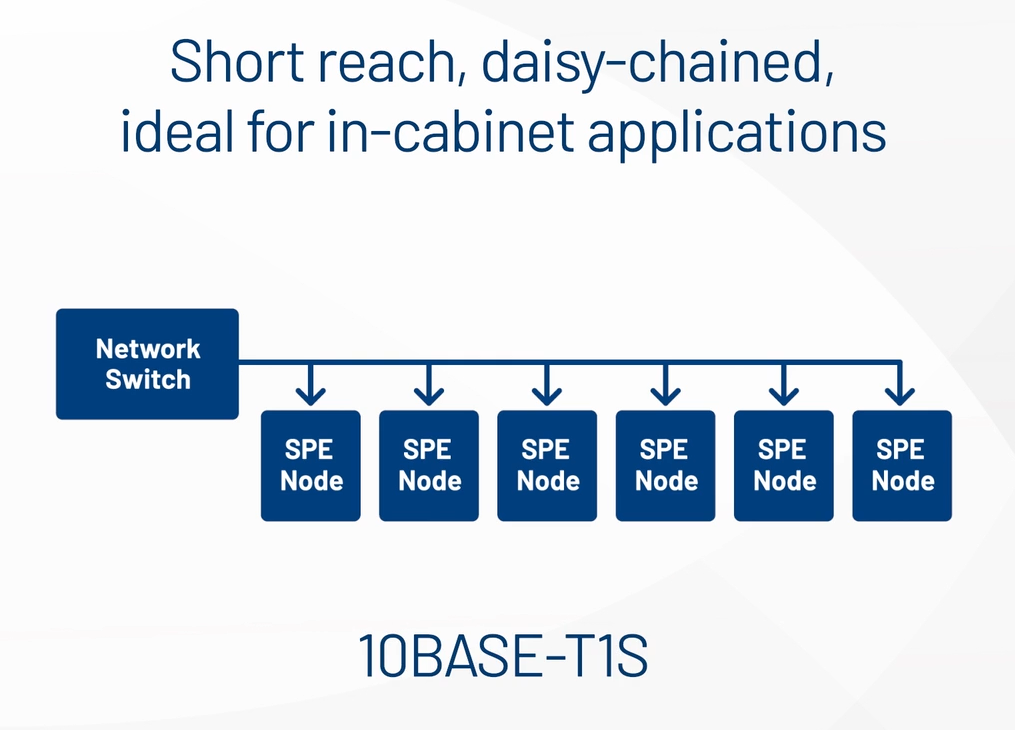
Supporting cable lengths of up to 25 meters and a multi-drop topology, EtherNet/IP In-Cabinet enables fast, reliable connectivity for up to 40 devices on a single segment. This approach reduces device complexity, minimizes the average number of interfaces per device, and simplifies control panel design.
Connecting simple, low-cost devices, such as push buttons and contactors, to the EtherNet/IP network increases the value of existing networks and helps eliminate the need for multiple lower-level networks. Supporting both constrained and non-constrained devices on a single Ethernet network helps simplify installation and improve operational efficiency.
EtherNet/IP In-Cabinet: How it Works
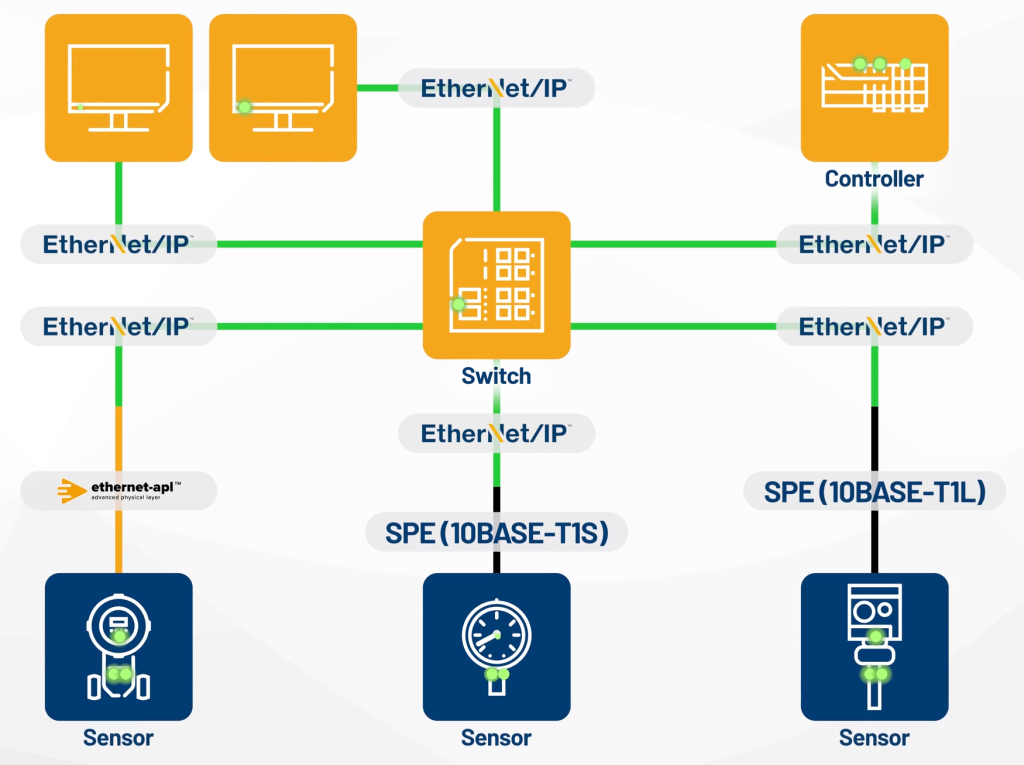
The extension of EtherNet/IP for in-cabinet resource-constrained devices allows manufacturers to connect components such as contactors, push buttons, motor starters, and indicator lights to a single Ethernet network. This is achieved through:
- 10BASE-T1S Single Pair Ethernet for one seamless CIPTM network that supports both constrained and non-constrained devices.
- Low-overhead UDP-only EtherNet/IP communication to reduce complexity while maintaining performance.
- Shared in-cabinet cabling with switched and network power to simplify installation and reduce wiring costs.
By replacing traditional hardwired connections, EtherNet/IP In-Cabinet delivers diagnostics, asset identity information, device parameters, automatic node topology discovery, and device replacement. The connection of resource-constrained devices to EtherNet/IP increases the value of existing networks for end users and reduces the need for secondary lower-level networks.
Key Benefits of EtherNet/IP In-Cabinet
Historically, control cabinet devices have remained hardwired because of cost, size, and power limitations. Advances in technology and the introduction of SPE now make it practical to network even the smallest industrial devices. Expanding EtherNet/IP connectivity to include these devices opens tremendous opportunity for further digital transformation within automation at the edge.
With additional diagnostics, asset information and parameterization capability, automatic node topology discovery, and plug and play device replacement, EtherNet/IP In-Cabinet delivers many advantages for machine builders and end users, including:
- Seamless integration of existing IT and OT networks
- Reduced wiring and setup time
- Reduced panel size
- Simplified network configuration
- Improved sustainability
Future-Ready Industrial Ethernet
The connection of resource-constrained devices to EtherNet/IP increases the value of existing networks for end users and reduces the need for secondary lower-level networks. The ability to obtain diagnostic, prognostic, and asset identity information remotely will help decrease unplanned downtime and improve the efficiency of existing assets.
As manufacturing systems become increasingly connected, EtherNet/IP In-Cabinet helps modernize control panel design to enable scalable, cost-effective connectivity to drive data-centric initiatives.